

Architecture
Outer support system
1352-1399
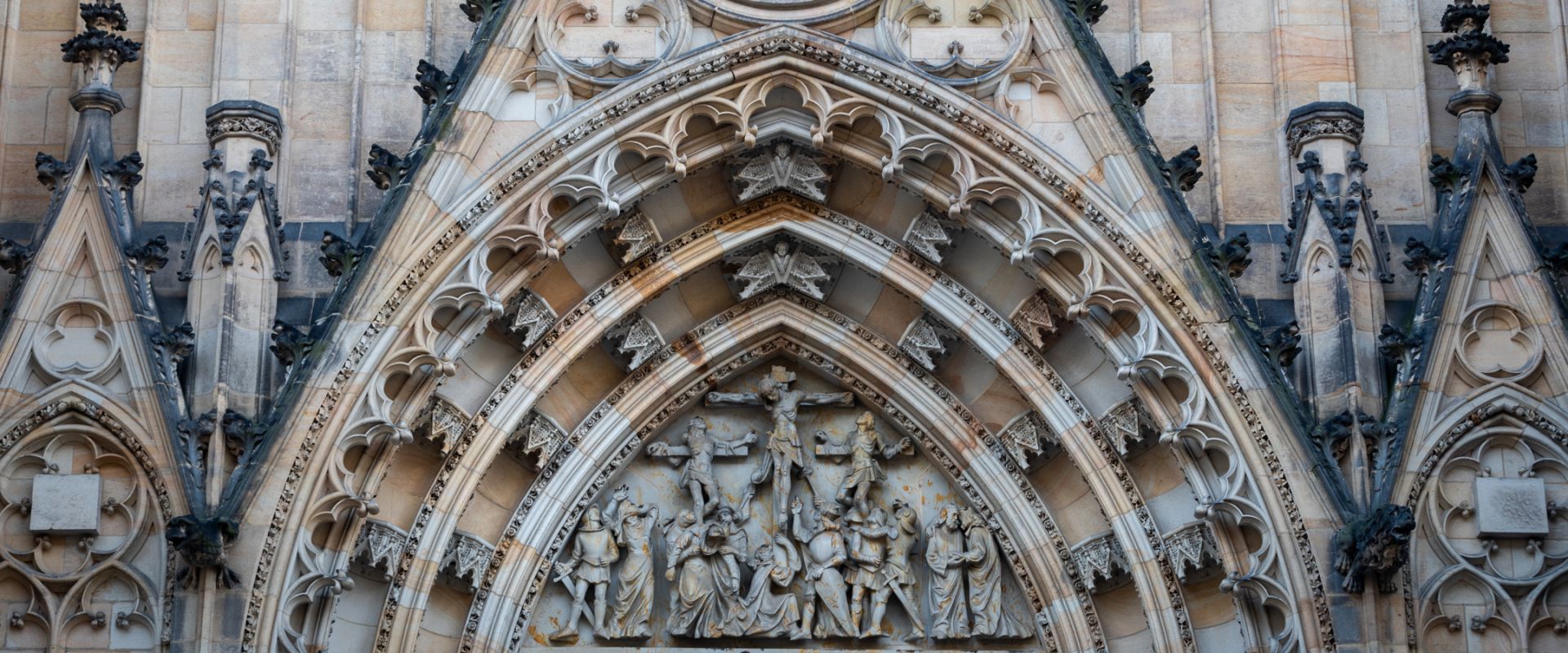
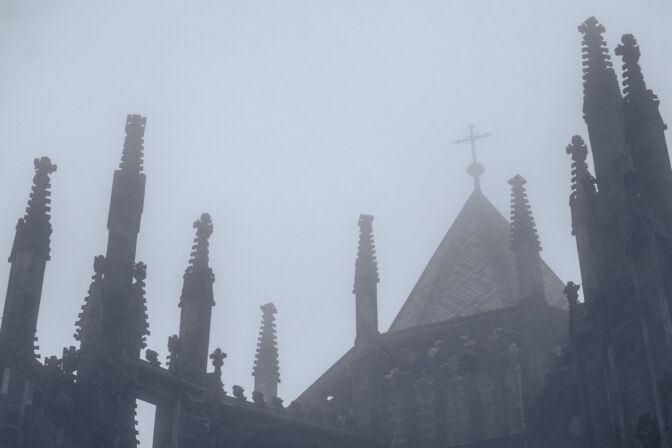
You do not have to step inside the cathedral to admire its artistic value. Its exterior—featuring an elaborate buttress system adorned with pinnacles, gargoyles, statues of saints, and ornamental details—also offers a wealth of interesting features and beautiful elements.
The last three medieval tracery designs
1360
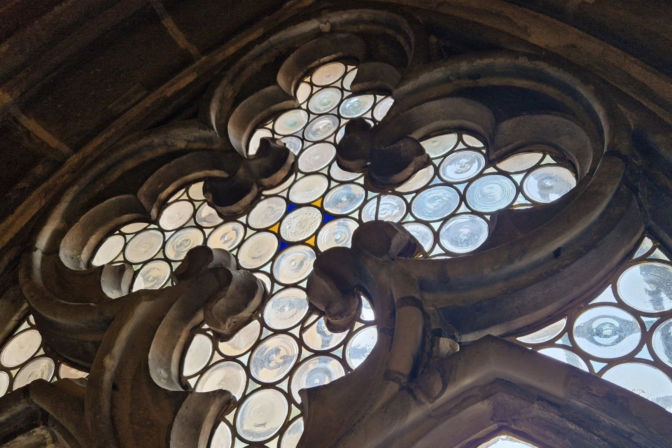
The cathedral contains the only three windows where original medieval tracery has been preserved. These are small, inconspicuous Gothic windows opening into the space of Parler’s Old Treasury, situated above the Old Sacristy. While inaccessible to visitors from the inside, they can be clearly viewed from the outside, from Vikářská Street.
Painted works
Stained glass windows
1344-1929
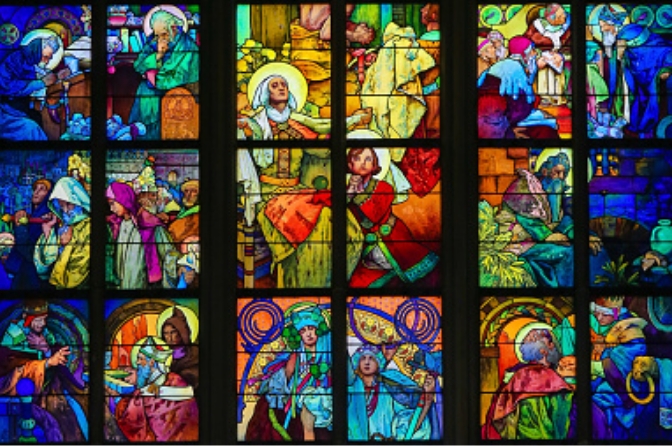
Stained-glass windows are an integral part of the cathedral, yet did you know that the most interesting ones have only been there for a relatively short time? The western section of the cathedral was not completed until 1929; upon its completion, several new stained-glass windows were installed, created by giants of the Czech art scene such as Alfons Mucha, František Kysela, Max Švabinský, Cyril Bouda, and Karel Svolinský.
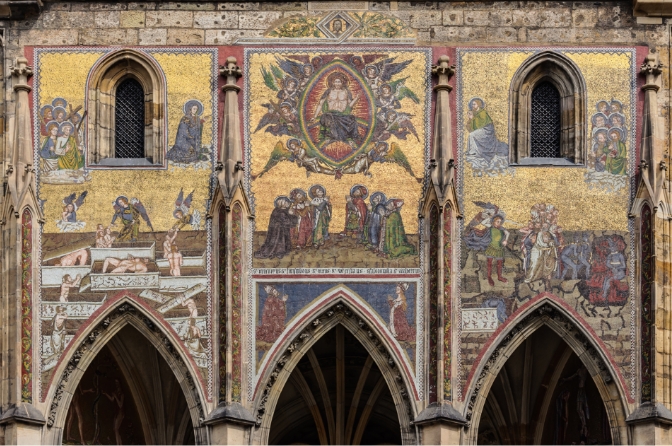
The Last Judgment
1370–1372
The Golden Gate mosaic depicts the Last Judgment, when every person will be judged and receive either eternal life or eternal damnation. The composition is divided into three sections; alongside traditional motifs—such as Christ as Judge accompanied by intercessors—it also features the kneeling figures of Charles IV and his fourth wife, Elizabeth of Pomerania.
Statues

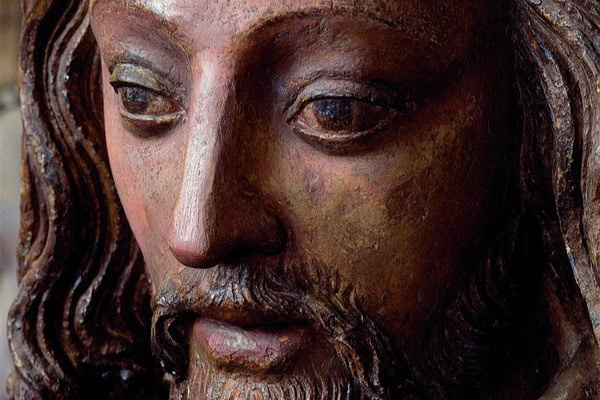
The Crucified Christ (altar)
František Bílek, 1899
One of the sculptures in the cathedral is, for instance, a carved altar by František Bílek that adorns the church’s left nave. Carved from various types of wood, the piece was acquired for a nominal price by President Masaryk, who subsequently donated it to the cathedral. Today, it is regarded as an outstanding example of late 19th-century woodcarving.
Statue of Saint Wenceslas in the Chapel of Saint Wenceslas
Peter Parler, cca 1370
The opuka-stone statue of St. Wenceslas stands just over two meters tall and weighs approximately 400 kg. Created by Peter Parler, this depiction of Wenceslas—unlike earlier portrayals showing him in knightly armor—presents him as an elegant aristocrat-warrior, roughly the age of Christ; he leans his left hand against a shield bearing the relief of the Přemyslid eagle while holding a spear in his other hand. His inclined head captures a distinctive facial expression, revealing a pensive melancholy that appears here for the first time during the reign of Charles IV.
Ecclesiastical furnishings of the cathedral
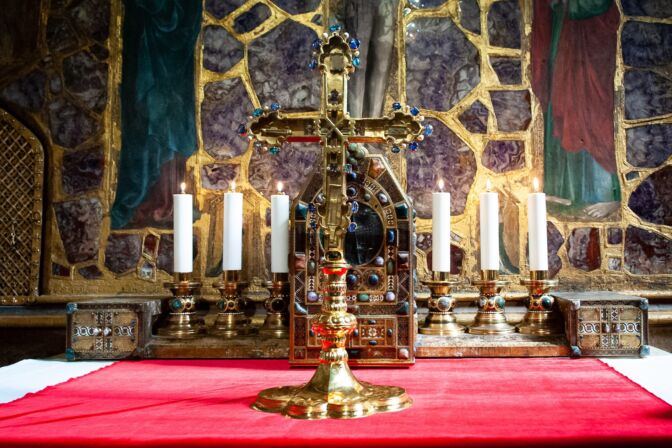
Treasury of St. Vitus Cathedral
from the 10th century
It comprises a collection of dozens of historical artifacts of inestimable value. They were used primarily in the liturgy and during significant ecclesiastical events. Individual pieces within the treasury frequently contain the relics of saints. The history of the treasury dates back to the 10th century—the era of the Přemyslid dynasty—and today it stands as the largest church treasury in the Czech Republic and one of the largest in Europe. Perhaps the most renowned items in the collection are the reliquary cross, the reliquary bust of St. Wenceslas, and the Sword of St. Wenceslas.
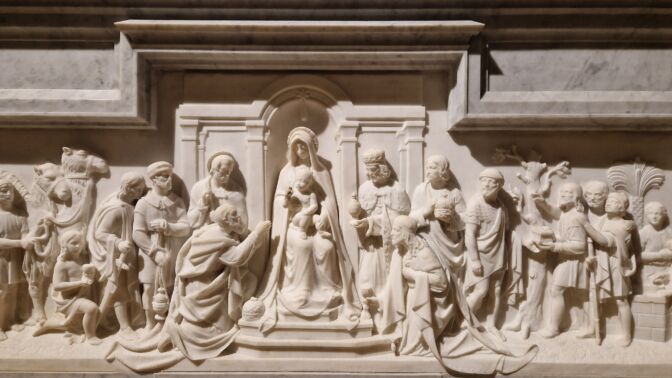
Altar in the Chapel of Saint Andrew
Wilhelm Theodor Achtermann, 1875
Contrary to popular belief, the cathedral is not primarily medieval but is filled with modern art. The magnificent white marble altar in the Chapel of Saint Andrew dates from the second half of the 19th century; its upper section depicts the Crucifixion, while the lower section shows the Adoration of the Magi.
Thank you for respecting these basic restrictions when visiting the cathedral